Water Retention (SAP)
Grades, absorption testing, gel life in soil
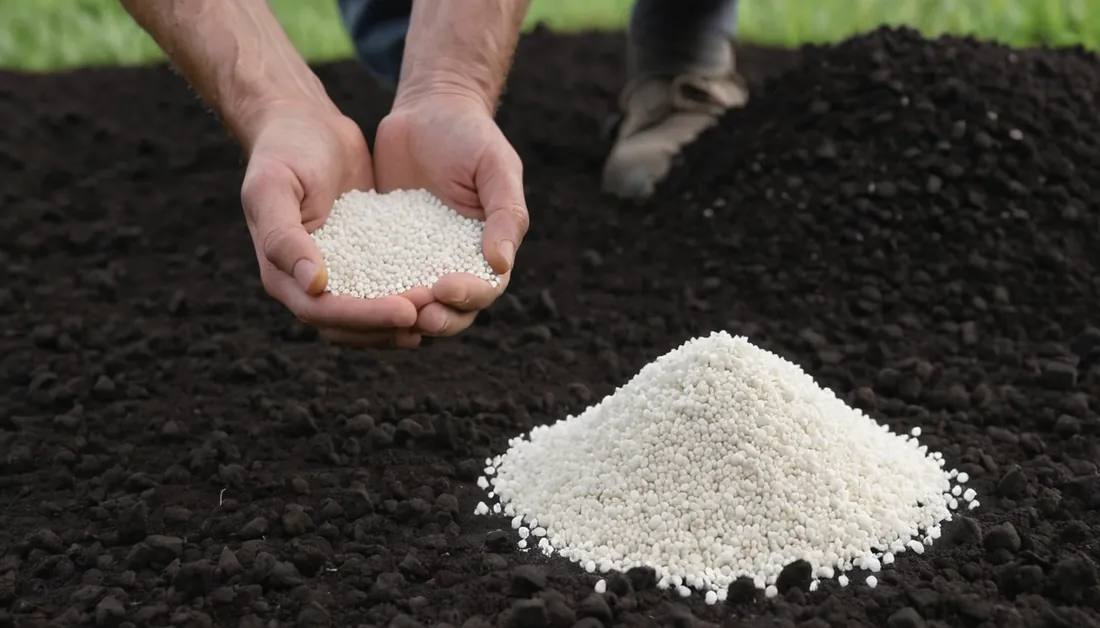
Super absorbent polymers (SAP) — usually cross-linked potassium or sodium polyacrylate — are the material behind most of the “water-retention granule” products sold into dryland agriculture. A single gram can hold several hundred grams of water, release it slowly to a root zone, and stay functional in soil for two to three years. That is the simple version. The procurement version is harder, because two products that look identical in a sample bag can behave very differently after a season in saline soil.
This channel is written for the people who have to specify, purchase and defend the decision: importers comparing factory offers, distributors writing a tender, farm programmes choosing a rate per hectare, and agronomists asked whether the granules “actually work”. We cover absorption measurement (and why distilled-water figures flatter every product), gel strength under load, particle-size selection by crop and soil, salinity and hard-water effects, application rates, and the documentation a buyer should demand before a container ships.
What this channel covers
- Grades and specification: absorption capacity, particle size distribution, bulk density, pH tolerance, residual monomer limits.
- Field behaviour: how soil solution, calcium and magnesium reduce real-world uptake; gel life under UV, tillage and fertiliser contact.
- Application: rates for field crops, tree and orchard planting, sandy soils, nurseries and transplanting.
- Buying: COA reading, sample testing protocol, MOQ and packaging, container loading, and what to put in a supply contract.
Start with the buyer and applicator guide if you are new to the material; it is the long-form reference behind most of the articles here.
Frequently asked
Is agricultural SAP the same as the hydrogel used in nappies?
Same chemistry family, different grade. Hygiene products use sodium polyacrylate tuned for soft-water absorption and fast swelling; agricultural grades are usually potassium-based or partly neutralised, with higher gel strength and a controlled release rate so the granule does not collapse under soil load. Never specify a hygiene grade for field use — it degrades faster and behaves badly in saline soil.
Why is absorption lower in my field trial than on the COA?
Certificates normally quote absorption in distilled water. In soil, the polymer is competing with ions: calcium, magnesium and fertiliser salts collapse the gel network and can cut usable capacity by half or more. Ask suppliers for absorption in 0.9% saline as well — it is the number that predicts field performance.
Can SAP be mixed with NPK fertiliser before application?
Yes, but not stored mixed. Dry blending is fine for immediate use; storing a blend for weeks draws moisture into the polymer and turns the mix into lumps. Apply polymer first, or blend on the day, and keep the two materials in separate moisture-barrier bags in storage.

Reading a super absorbent polymer COA: the six numbers that decide field performance
A super absorbent polymer (SAP) offer usually arrives with a one-page certificate of analysis and a headline absorption figure — 500×, 800×, sometimes 1,000× its own weight in water. That number is…
More in Water Retention (SAP)

Specifying water-retention polymer before a drought season: the 14-week buyer sequence
Every dry season produces the same enquiry pattern: buyers who waited for the drought to be declared, then…

Sodium Acrylate HS Code: Monomer vs SAP Sourcing
Distinguishing sodium acrylate monomer from SAP For sodium acrylate monomer, the HS code is generally 2916.11 at the…

Sodium Acrylate pH: Monomer Solution vs SAP Gel
What sodium acrylate pH actually refers to Sodium acrylate pH is not one fixed number: a partly neutralized…

Soil Moist JRM Chemical: SAP Grades, Rates and Failure Modes
"Soil moist jrm chemical" refers to Soil Moist, the potassium-based super absorbent polymer (SAP) line made by JRM…

Is Polymer Plastic Toxic? SAP Residuals and Real Doses
Short answer: no, not in the way the question usually implies. "Polymer" describes a molecule built from repeating…

Sodium Polyacrylate Starch Supplier: 9 Pre-Payment Checks
A sodium polyacrylate starch supplier should be able to tell you whether they polymerize a starch-grafted superabsorbent or…
Sodium Polyacrylate Cost per kg: Grade, Volume, Freight
Sodium polyacrylate typically costs about USD 1.2–2.0/kg FOB China for standard industrial powder, 1.5–2.6/kg for agricultural grades, and…
Are Polymers Biodegradable? SAP Grades in Real Soil
Direct answer: are SAP polymers biodegradable Some polymers are biodegradable and many are not — the deciding factor…

Sodium Polyacrylate Bag: Grade, Mesh Size and Salt Loss
What it is, in one paragraph A sodium polyacrylate bag contains a white granular super-absorbent polymer — chemically…

Sourcing SAP Modules for Manufacturing: 7 Pre-Payment Checks
In industrial procurement, "SAP modules" usually means super absorbent polymer supplied as a formulated unit — powder, granular,…
SAP MM Certification Cost in India: What Each Route Really Costs
In India, SAP MM certification — now examined as SAP Certified Associate in S/4HANA Sourcing and Procurement —…
Polymer Resin Prices: SAP Grade Bands and Quote Traps
Polymer resin prices for super absorbent (SAP) grades typically sit around USD 1,200–1,900 per tonne FOB China for…